
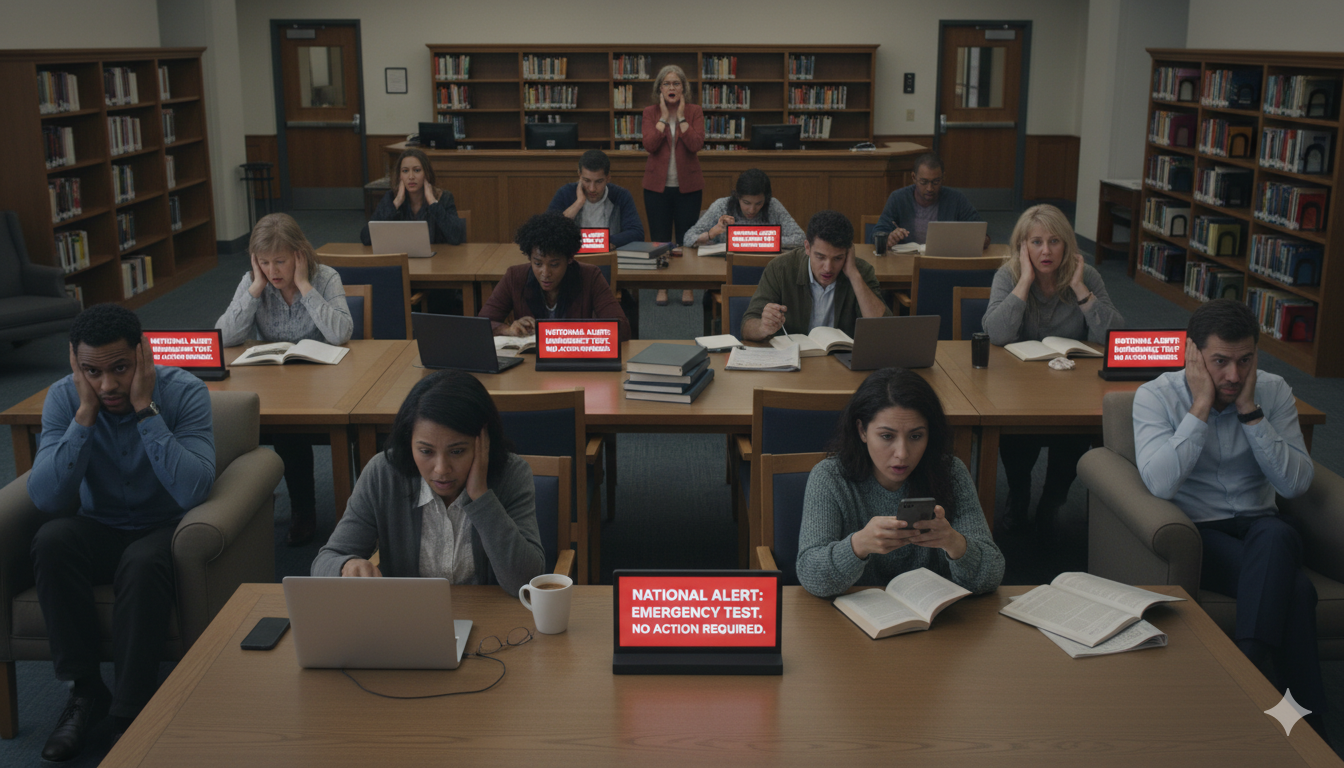
Have you ever been sitting quietly when suddenly every phone in the room starts screaming? National Alert Test It can be a bit startling! That loud siren and vibration are part of the national alert test. This system is a vital tool used by the government to make sure they can reach everyone during a major emergency. Whether it’s a natural disaster or a public safety threat, the goal is to keep you and your family safe.
In this article, we’ll dive deep into everything you need to know about these alerts. We will look at when they happen, why we have them, and what to expect when your phone goes off. Understanding the national alert test helps take the mystery out of that loud noise and ensures you’re prepared for the real thing.
What Exactly is a National Alert Test?
A National Alert Test is a planned check of the systems that send emergency messages to the public. There are two main parts to this: the Wireless Emergency Alerts (WEA) for your mobile phones and the Emergency Alert System (EAS) for your radio and television. FEMA and the FCC work together to run these tests across the entire country at the same time.
The main reason for a national alert test is to make sure the “plumbing” of the emergency system is working. If a real crisis happened, like a massive hurricane or a national security event, the President needs to be able to talk to the whole country within minutes. These tests help engineers find any glitches in the system before a real emergency occurs.
Why is There a National Alert Test?
You might wonder, why is there a national alert test if we already have local weather alerts? While local alerts are great for a single town or county, a national test checks the big infrastructure. It ensures that cell towers, satellite providers, and broadcasters can all handle a message sent from the federal level simultaneously.
Regular testing also helps the public get used to the sound. When you hear that specific tone, you instantly know it’s an important message. By running a national alert test, FEMA can also gather data on how many people actually received the message. This helps them improve the technology so that no one is left in the dark during a disaster.
When Was the Last National Alert Test?
Many people clearly remember the national alert test october 4 in 2023. That was a major event where almost every cell phone in the United States buzzed at the exact same time. It was a successful test that allowed FEMA to verify that their “IPAWS” system (the digital gateway for these alerts) was functioning as intended.
If you are asking when was the last national alert test, the answer depends on where you live. While the U.S. had its big one in late 2023, other countries like the UK held a national alert test as recently as September 7, 2025. These tests are becoming more common worldwide as governments realize how important it is to have a direct line to every citizen’s pocket.
October 4th National Alert Test: A Look Back
The october 4th national alert test in 2023 was a landmark moment for emergency preparedness. It started at approximately 2:20 p.m. ET. For about 30 minutes, cell towers broadcast the signal. If your phone was turned on and within range of a tower, you likely saw a message that said: “THIS IS A TEST of the National Wireless Emergency Alert System. No action is needed.”
This national alert test october 4 was specifically designed to reach as many people as possible. It even included a Spanish version for those who had their phone language set to Spanish. It proved that the government could reach millions of people in seconds, which is a huge win for public safety and national resilience.
When is the Next National Alert Test?
If you are looking for when is the next national alert test, the official schedule for a nationwide U.S. test in 2026 has not been finalized yet. FEMA usually announces these tests several months in advance to avoid causing panic. However, they are required by law to conduct these tests at least once every three years to maintain system integrity.
While there might not be a national alert test today, it is always good to stay “emergency ready.” Many states and local counties run their own smaller tests throughout the year. Keeping your “Test Alerts” turned on in your phone settings is a good way to participate in these local checks and ensure your device is compatible with the latest software.
At What Time is the National Alert Test?
Timing is everything when it comes to these events. Usually, when FEMA schedules one, the question is: at what time is the national alert test? They almost always pick a weekday afternoon. This is because most people are awake, and emergency management offices are fully staffed to monitor the results in real-time.
For example, the famous 2023 test occurred at 2:20 p.m. ET. Choosing a mid-afternoon slot helps ensure that the national alert test doesn’t interrupt people during the middle of the night or during a busy morning commute. If a test were scheduled for today, you would likely see news reports days in advance giving you the exact minute to expect the buzz.
FEMA National Alert Test Details
The fema national alert test is a massive technical undertaking. FEMA uses a system called the Integrated Public Alert and Warning System (IPAWS). Think of IPAWS as a giant post office. Authorized officials “drop off” a message, and IPAWS “delivers” it to your phone, your TV, and your local radio station all at once.
During a fema national alert test, the agency isn’t just looking at phones. They are also checking “Primary Entry Point” (PEP) radio stations. These are specially hardened stations that can stay on the air even during a nuclear event or a total power grid failure. The test ensures that these stations can receive and relay the President’s message to the rest of the country.
Is There a National Alert Test Today?
If you heard a loud noise and are searching for a national alert test today, it is likely a local test or a real weather warning. As of right now, there is no nationwide test scheduled for today, March 2, 2026. However, your local National Weather Service office may conduct “Required Weekly Tests” (RWT) or “Required Monthly Tests” (RMT) for your specific area.
It is a common misconception that every loud alert is a national alert test. Most of the time, those sounds are for Amber Alerts (missing children) or Silver Alerts (missing seniors). If you ever want to check for an active nationwide test, the best place to look is the official FEMA or FCC social media accounts, where they post updates frequently.
Key Information Summary Table
| Category | Details |
| Primary Agency | FEMA (Federal Emergency Management Agency) |
| Partner Agency | FCC (Federal Communications Commission) |
| System Used | IPAWS (Integrated Public Alert & Warning System) |
| Last Major U.S. Test | October 4, 2023 |
| Typical Time | Mid-afternoon (e.g., 2:20 PM ET) |
| Alert Duration | Approximately 10 seconds of sound/vibration |
| Message Content | “THIS IS A TEST… No action is needed.” |
How to Prepare Your Devices
Even though a national alert test is just a trial run, it’s a great reminder to check your settings. On most smartphones, you can find “Emergency Alerts” in the Notifications menu. You can choose to opt-out of test alerts, but it is highly recommended to keep them on. You want to know for sure that your phone will warn you if a real tornado or flood is coming your way!
If you have a “secret” phone for safety reasons (like for domestic hardware protection), remember that a national alert test will override silent mode. During the october 4th national alert test, many safety advocates reminded people to turn those hidden devices completely off to prevent them from being discovered by the loud siren sound.
The Future of Emergency Alerting
The technology behind the national alert test is always getting better. In the future, we might see alerts that are more “geo-targeted.” This means the government could send a message only to people on one specific street during a fire. We are also seeing more alerts that include links to maps or evacuation routes, making the system even more helpful.
No matter how the technology changes, the national alert test will remain a cornerstone of our safety. It’s a small interruption that provides a huge amount of security. Knowing that the system works gives everyone peace of mind. So, the next time your phone makes that “scary” noise, just remember: it’s your local and national heroes making sure they can keep you safe when it matters most.
Frequently Asked Questions (FAQs)
1. Can I opt-out of the national alert test?
Most phones allow you to turn off “Test Alerts” in settings. However, you cannot opt-out of “Presidential” or “National” level alerts. These are considered vital for national security and will always go through if the phone is on.
2. Will the alert happen if my phone is on silent?
Yes. A national alert test is designed to override silent and “Do Not Disturb” modes. This ensures that even if you are sleeping or in a meeting, you will receive life-saving information during a real emergency.
3. Do I need an internet connection to get the alert?
No. These alerts use cell broadcast technology. It is more like a radio signal than a text message. As long as you are connected to a cell tower (even without a data plan), you can receive a fema national alert test.
4. Why didn’t I get the last national alert test october 4?
There are a few reasons. Your phone might have been off, in airplane mode, or not compatible with the WEA system (very old phones). Also, if you were in a “dead zone” with no cell signal, the message couldn’t reach you.
5. How much does it cost to receive these alerts?
The alerts are completely free. They do not count against your texting or data limits. The government and wireless carriers provide this as a public service to ensure everyone stays informed.
6. Does the government track my location using these alerts?
No. The system is a “one-way” broadcast. The cell tower sends the signal to every phone in its range. The government does not get any information back about who received it or where you are located.
Conclusion
Staying informed about the national alert test is a simple yet effective way to be a prepared citizen. While the sounds can be jarring, they represent a high-tech shield designed to protect us all. Whether it’s reflecting on the national alert test october 4 or looking forward to the next scheduled check, these tests ensure our national safety systems are always ready for action.