
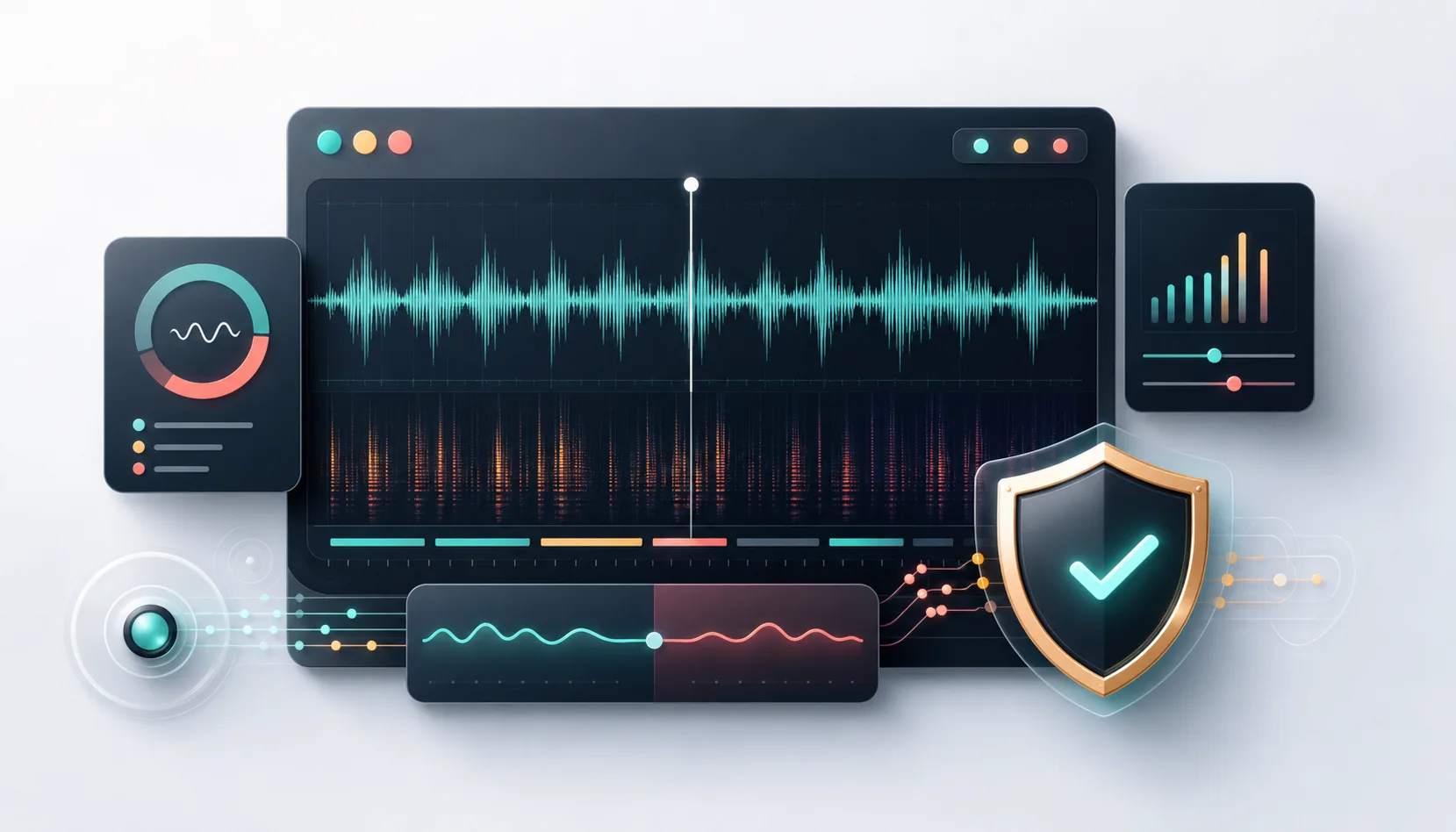
Artificial intelligence has changed how people create and share audio. Today, AI tools can produce realistic voices, copy speech patterns, and read scripts naturally. These tools help with videos, podcasts, online learning, and customer service. However, they also create new problems. Some people use synthetic voices to spread false information or imitate others without permission.
An AI voice detector can help people examine audio and identify signs of artificial speech. It uses technology to look for patterns that may separate human recordings from AI-generated voices. These systems can support journalists, content creators, teachers, businesses, and everyday internet users. However, no detector can identify every artificial voice with perfect accuracy. Real recordings may also receive incorrect results. Understanding how these tools work helps you make better decisions. This guide explains their features, benefits, limits, and practical uses in simple language.
What Is an AI Voice Detector?
An AI voice detector is a digital tool that analyzes audio to estimate whether a voice sounds human-made or artificially generated. It may examine speech patterns, sound frequencies, pauses, and other audio features. Some tools focus on synthetic speech, while others aim to detect cloned voices or manipulated recordings. You can find solutions designed for personal use, research, media checks, and business security.
The main goal is to provide useful evidence about an audio recording’s possible origin. For example, you might receive a suspicious voice message that sounds like your manager. A detector could help you check whether the recording contains signs of artificial speech. Still, its result should not be treated as final proof. Recording quality, background noise, compression, and voice changes can affect the outcome. Always consider the source and context before deciding whether an audio clip is genuine.
How Does an AI Voice Detector Work?
Most voice detection systems use machine learning to study audio signals. Developers train these systems with examples of human speech and synthetic speech. The software learns patterns that may appear more often in one type of recording. When you upload a new audio clip, the detector compares its features with patterns learned during training.
Some systems examine tiny changes in pitch, rhythm, tone, and pronunciation. Others analyze speech frequencies or signs of audio processing. Advanced tools may also use deep learning models to identify complex patterns. The exact method depends on the product and its training data. A clean recording may produce different results from a noisy phone call. For this reason, a detection score is usually an estimate, not a guarantee. The best approach combines automated analysis with careful listening and independent verification.
Why Are AI Voice Detectors Important?
AI-generated voices can sound natural enough to fool people during everyday conversations. This creates risks for families, businesses, public figures, and online communities. Someone might create a fake recording to damage a person’s reputation. Another person could imitate a family member and request urgent financial help. These examples show why checking suspicious audio can be useful.
An AI voice detector adds another layer of protection when the source of a recording is unclear. It can help users decide whether they should investigate further. However, detection alone cannot confirm who created a clip or why it was made. A suspicious result should encourage careful checking rather than immediate accusations. Contact the supposed speaker through a trusted channel. Check the original source and look for reliable supporting evidence. These simple steps can reduce the risk of believing or sharing misleading audio.
Key Features to Look for in an AI Voice Detector
Different detection tools offer different features. Some accept short audio clips, while others support longer recordings or multiple file types. Certain platforms provide confidence scores, timestamps, or explanations of suspicious sections. Others return only a simple result. Choosing the right tool depends on your needs, technical skills, and privacy concerns.
Look for clear instructions, supported audio formats, and transparent information about limitations. A useful service should explain what its results mean. It should also avoid claiming perfect accuracy without strong evidence. If you plan to check many recordings, review file limits and processing speed. For private or sensitive recordings, examine the service’s data retention policy. Do not upload confidential conversations without proper permission. A straightforward interface is helpful, but reliable testing and responsible data handling matter more than attractive design.
AI Voice Detector Overview Table
An AI voice detector is a type of software, not a person. Therefore, a personal biography table would not accurately describe it. The following overview table provides the relevant details readers usually need before using one.
| Detail | Information |
| Name | AI Voice Detector |
| Category | Audio analysis and synthetic speech detection |
| Main purpose | Estimate whether speech may be AI-generated |
| Technology | Machine learning and audio signal analysis |
| Common inputs | Audio files and supported voice recordings |
| Possible results | Detection labels, probability scores, or confidence estimates |
| Common users | Creators, researchers, businesses, educators, and journalists |
| Main benefits | Faster audio screening and additional evidence |
| Main limitations | False positives, false negatives, and uncertain results |
| Cost | Free, paid, or limited free access, depending on the provider |
| Privacy considerations | Upload rules, data retention, and consent requirements |
| Best practice | Combine detector results with source verification |
This table offers a general overview rather than details about one specific product. Features, prices, and supported formats vary by provider. Before choosing a service, read its current terms and test it with suitable sample recordings. Remember that an automated score does not prove a recording’s origin. A careful review should consider the audio itself, its source, and other available evidence.
How to Use an AI Voice Detector
Using a detection tool is often simple, even for beginners. First, choose a service that supports your audio format and intended use. Read its privacy policy before uploading any personal or confidential recording. Make sure you have permission to submit the audio when required. Then, prepare a clear recording and follow the platform’s instructions.
Upload the file or provide an audio link if the service supports that option. Wait for the analysis to finish, then read the result carefully. Some tools display a percentage or confidence score. Others label a recording as likely human or likely synthetic. Do not assume these labels represent certainty. If the result seems surprising, try another reputable method and examine the recording’s source. Avoid editing the file unnecessarily before testing it. Changes such as noise removal or heavy compression can affect some detection systems. Keep a record of your findings if you need to review the decision later.
Common Signs of AI-Generated Voices
AI speech has improved, so listening alone cannot reliably identify every synthetic recording. Still, some clips contain clues that deserve closer attention. A voice might have unusually even pacing, repeated intonation patterns, or strange pauses between words. Certain recordings may also include unnatural pronunciation or changes in emotional tone. These signs can become more noticeable in longer conversations.
Listen for sudden shifts in sound quality, awkward emphasis, or breathing that seems inconsistent with the speech. However, human speakers can also sound robotic when reading scripts. People may pause strangely because of nerves, illness, or poor recording equipment. A noisy connection can create audio artifacts that resemble synthetic speech. Therefore, these clues should never be treated as proof. Use them to guide further investigation, not to judge a speaker’s identity. A detection tool can add useful information, but the original source and surrounding evidence remain important.
AI Voice Detector vs. Human Listening
Human listening and automated detection each have strengths. People can understand context, recognize familiar speech habits, and notice when a conversation seems unusual. However, realistic synthetic voices may sound completely natural to ordinary listeners. Automated systems can examine patterns that are difficult to hear without special equipment. They can also process recordings more quickly than a detailed manual review.
Neither method works perfectly in every situation. A detector may flag genuine speech, especially when the recording has unusual qualities. A listener may also mistake a real voice for an artificial one. Combining both methods can provide a more balanced assessment. Listen carefully, review the detector’s findings, and check the recording’s history. If the audio involves money, safety, or serious allegations, verify it through an independent communication channel. This approach reduces the chance of making a major decision based on one uncertain result.
Best Uses of an AI Voice Detector
Voice detection tools can help in several areas. Content creators may use them to review audio before publishing videos or podcasts. Journalists can use them as one part of a broader fact-checking process. Businesses may examine suspicious voice messages that appear to come from employees or managers. Researchers can study synthetic speech and evaluate how detection methods perform.
Teachers and students may also use these tools to explore how AI-generated audio works. Families can consider them when checking unusual voice messages from unknown sources. However, each situation requires a different level of care. A creator checking a sample voice has different needs from a company investigating suspected fraud. Choose a tool suited to your purpose and follow applicable privacy rules. An AI voice detector should support informed decisions rather than replace human judgment. In sensitive cases, seek additional evidence before taking action against someone or sharing a serious claim publicly.
Can Free AI Voice Detection Tools Be Trusted?
Free tools can be useful for basic checks and learning. They let users explore audio analysis without paying for a subscription. Some provide enough information for casual screening, while others limit file length, daily checks, or advanced reports. Free access does not automatically mean a tool is unreliable. Likewise, a paid subscription does not guarantee better results.
When comparing free services, examine their stated capabilities and limitations. Check whether the provider explains its testing methods or publishes independent evaluations. Look for clear information about accuracy, supported languages, and recording conditions. Be cautious when a website promises to detect every fake voice perfectly. No detection system should be trusted solely because it produces a confident-looking percentage. If a recording matters greatly, compare the result with other evidence. Also, check whether the service stores uploaded audio or uses it to improve its models. Good privacy practices are just as important as useful detection features.
AI Voice Detection for Scams and Fraud Prevention
Voice cloning can make a fraudulent call sound like someone you know. A scammer may imitate a relative, a business leader, or another trusted person. The message might create panic by claiming someone needs money immediately. Even a familiar voice should not be accepted as proof of identity.
An AI voice detector may help screen a suspicious recording, but it cannot replace identity checks. If someone asks for money, pause before responding. Call the person using a phone number you already trust. Ask a question that cannot be answered using information available publicly. For business payments, follow your company’s normal approval process. Never rely only on a voice message or caller ID. Scammers can manipulate both audio and displayed phone information. Report suspected fraud through the appropriate local channels. These habits remain valuable even when a detector says the recording sounds human.
Limitations and Accuracy of AI Voice Detectors
No AI voice detector can guarantee a correct result for every recording. Detection systems may perform well on familiar audio samples but struggle with new voice-generation methods. Some tools may also work better with certain languages, accents, or recording conditions. A short voice clip often provides less evidence than a longer, clear recording.
Two important errors can occur. A false positive happens when genuine human speech is incorrectly flagged as artificial. A false negative happens when synthetic speech is incorrectly identified as human. Both mistakes can cause problems. A false positive could damage someone’s reputation, while a false negative could allow misleading audio to go unnoticed. Accuracy claims should therefore be reviewed carefully. Look for independent testing that resembles your intended use. Treat confidence scores as estimates, and avoid using detector results as the only evidence in legal, academic, or employment decisions.
Privacy and Ethical Considerations
Voice recordings can contain personal information, private conversations, and identifying details. Uploading them to an online detector may expose that information to another service. Before submitting audio, check the provider’s privacy terms. Find out whether files are stored, shared, or used for model training. Use a trusted platform and obtain consent when appropriate.
Ethical use matters as much as technical accuracy. Do not label someone a liar based only on an automated score. Human voices can sound unusual for many harmless reasons. Avoid secretly recording private conversations where doing so violates applicable rules. If you create synthetic voices, follow the relevant platform policies and respect the speaker’s rights. Disclose AI-generated audio when transparency is important. Responsible use helps people benefit from voice technology without ignoring privacy, consent, or the risk of false accusations.
How to Choose the Right AI Voice Detector
The right tool depends on what you want to check. Casual users may prefer a simple service with clear instructions. Journalists and researchers may need more detailed reports and transparent testing information. Businesses may require stronger privacy controls and support for larger audio files. There is no single tool that is best for every situation.
Start by checking the supported file formats, languages, and recording lengths. Review how the tool explains its results and whether it provides useful evidence. Read the privacy policy before uploading sensitive material. Compare independent evaluations when available, especially if accuracy is important. Test the service using recordings whose origins are already known. Include both human and synthetic samples when you can obtain them responsibly. This helps you understand how the tool behaves in practice. Ultimately, choose a service that explains uncertainty honestly instead of promising perfect detection.
The Future of AI Voice Detection
Voice-generation technology continues to improve. Modern systems can create expressive speech with natural pauses and convincing emotions. As these tools advance, detection methods must also adapt. Developers are exploring better audio analysis, improved training data, and ways to verify where recordings come from. These changes may help people assess suspicious content more effectively.
However, the future will likely require more than detection alone. Content authentication, secure recording methods, and clear disclosure may also become important. For example, a verified recording history could help establish where a file originated. Such evidence would complement an automated detector rather than replace it. Users will still need to check context and confirm important claims. Technology can make verification easier, but responsible decisions remain essential. Learning how synthetic speech works today can help people respond more carefully as voice tools become more realistic.
Practical Tips for Getting Better Detection Results
You can improve your review process by following a few simple steps. Start with the original audio file whenever possible. Avoid using clips that have been heavily edited or compressed. Make sure the recording is long enough for the tool to analyze meaningful speech. Follow the provider’s recommended file requirements for the best experience.
Next, use the same process when comparing different recordings. Write down the tool’s result and note any unusual audio features. If possible, test more than one independent detector. Different tools may reach different conclusions because they use different models and training data. Never change a recording simply to make a detector produce a preferred answer. Most importantly, verify suspicious claims through trusted sources. A careful process helps you understand the evidence without overstating what any single tool can prove.
Conclusion
An AI voice detector can help you examine suspicious recordings and understand whether speech may be artificially generated. It can support content reviews, scam prevention, research, and media verification. However, its results are estimates rather than guaranteed answers. Even advanced systems can make mistakes with human and synthetic speech.
Choose tools that explain their limitations and respect your privacy. Listen carefully, examine the original source, and seek independent evidence when the stakes are high. If a voice message asks for money or urgent action, verify the speaker through a trusted channel. These habits can protect you from deception without encouraging unfair accusations. As AI audio becomes more realistic, informed and careful verification will become increasingly important. Share your experiences with voice detection tools and help others learn how to assess suspicious audio responsibly.
Frequently Asked Questions (FAQs)
1. What is an AI voice detector?
An AI voice detector is software that analyzes audio to estimate whether speech was created by a human or generated by artificial intelligence. It may examine sound patterns, pitch, timing, and other features. Its findings can help with verification, but they do not prove a recording’s origin.
2. Can an AI voice detector identify cloned voices?
Some tools are designed to detect signs of voice cloning and synthetic speech. However, their performance varies across recording types, languages, and generation methods. A realistic cloned voice may escape detection, so you should verify suspicious recordings through other reliable methods.
3. Is there a free AI voice detector online?
Yes, some online services offer free checks or limited free access. Their features may include upload limits, shorter recordings, or fewer daily scans. Review their privacy policies and limitations before uploading personal audio.
4. How accurate are AI voice detectors?
Accuracy varies by tool, audio quality, language, and the method used to generate the voice. False positives and false negatives are both possible. Independent testing and additional evidence provide a better basis for decisions than a single detection score.
5. Can I detect an AI voice just by listening?
Sometimes, unusual pauses, unnatural pronunciation, or inconsistent emotion can provide clues. However, modern synthetic speech can sound very natural. Human speakers can also have unusual speech patterns. Listening is useful, but it cannot reliably identify every AI-generated recording.
6. Are AI voice detection tools safe to use?
They can be useful, but safety depends on the service and how you use it. Check whether uploaded files are stored, shared, or used for training. Avoid uploading confidential recordings without proper permission. For sensitive situations, choose a service with clear privacy protections and verify its results independently.